
Toronto · Media buying agency
Media buying agency for businesses in Toronto
Media buying services, media planning and buying, and programmatic advertising across Google, Meta, YouTube, TikTok and LinkedIn, judged by the customers each channel produces.
Canada Create™ plans where your budget goes, buys the placements and manages them every week, with each channel tied to verified tracking, landing pages and follow-up. Media spend is paid to the platforms from accounts you own and never marked up.
Get a free Toronto media review
Tell us where you advertise today, your budget and your goals. A specialist replies within one business day.
Toronto: (416) 273-9030Toll Free: +1 (800) 808-9235
Please do not share passwords or other sensitive details here. We never sell your contact information and we comply with Canadian privacy law (privacy policy).

What media buying should produce
Customers, not clicks
Every channel judged by enquiries, bookings and sales.
Less wasted spend
Poor placements, audiences and search terms cut early.
The right media mix
Budget moved toward the channels that pay back.
Numbers you can trust
Platform claims checked against your own sales data.
What our media buying covers
Scoped in writing after a free review.
- Media planning and buyingObjectives, channels, budget split, pacing and thresholds in writing.
- Search campaignsGoogle search and Performance Max with strict controls.
- Social media buyingMeta, TikTok and LinkedIn campaigns built around creative testing.
- Video and connected TVYouTube, Shorts and streaming TV placements.
- Programmatic advertisingDisplay, native, video, audio and digital out-of-home with brand safety.
- Creative for each placementPlacement-specific creative, with new variations planned from performance and frequency trends.
- Landing pages and follow-upPages built to convert paid traffic, connected to CS+ or your CRM.
- Measurement and reportingVerified tracking, a live dashboard and plain monthly reports.
Media buying pricing
Custom-scoped engagements; proposal after discovery. The initial review is free.
Media buying management
Quoted in writing
Planning, buying and optimization across your chosen channels. Cost drivers: number of channels and campaigns, locations, languages and reporting depth.
- Written media plan
- Weekly optimization
- Budget pacing
- Monthly reporting
Programmatic advertising
Quoted in writing
Display, native, video, connected TV, audio and digital out-of-home. Cost drivers: formats, deal types and placement controls.
- Curated inventory
- Brand safety and fraud controls
- Frequency caps
- Lift measurement
Setup, creative and landing pages
Quoted in writing
One-time setup and production, quoted separately from monthly management.
- Tracking and consent setup
- Account restructuring
- Ads for each placement
- Landing pages and testing
Media spend is your budget, paid directly to the platforms from accounts you own and never marked up. Management and setup fees are confirmed in writing after a free review.
Plan, buy, measure, refine
How we buy media for businesses across Canada and the US
A media buying agency that answers to your sales numbers
Canada Create™ is a media buying agency for businesses across Canada and the United States. We plan where your advertising budget goes, buy the placements and manage them every week so each dollar has the best chance of producing customers. Our media buying services cover Google, Meta, TikTok, LinkedIn, YouTube and programmatic advertising, and every channel is judged by the enquiries, bookings and sales it produces rather than the clicks it reports. Done well, media buying matches your message to the people most likely to buy, on the channels where they spend time, at a price that makes sense. Done badly, it spreads money across platforms because they are available, not because they work.
We have worked in digital marketing since 2008, and our media team combines planning, buying, creative, landing pages and measurement under one roof. That matters because the choice of where to advertise only pays off when it is connected to what the ads say, where they send people and what happens after someone enquires. You get one accountable team, one plan and one set of numbers.
What is a media buying agency?
A media buying agency is a firm that plans, negotiates, buys and manages advertising space on behalf of a business. The space might be a search result, a social feed, a YouTube pre-roll, a banner on a news site, a streaming TV spot, a podcast read or a digital billboard. The agency decides which of those placements are worth paying for, at what price, for which audience and for how long, and then manages the buy so money moves toward what works.
The job has two halves. Media planning decides the strategy: who you need to reach, which channels reach them, how much to spend on each and how success will be measured. Media buying executes it: setting up campaigns, bidding in auctions or negotiating deals, pacing budgets, checking where ads appear and adjusting daily. We keep planning and buying connected, with a named specialist accountable for the plan and its ongoing management.
Keep media, creative and conversion work connected
Media planning should account for the creative, destination page and follow-up behind each placement. When different teams own those steps, agree on the audience, message, measurement and approval process before launch. Our media buying services include creative planning and testing, with landing pages and follow-up considered alongside the buy.
Media planning and buying, step by step
Every engagement starts with a plan, and nothing is bought until the plan is agreed in writing.
1. Business review
We look at what you sell, who buys it, how long they take to decide, what a customer is worth over time and how much you can afford to pay to win one. We review past campaigns, your website and landing pages, your tracking and how leads are handled once they arrive. If you have run ads before, we audit the accounts to find waste and missed opportunities before recommending anything new.
2. Audience and demand research
We map where your buyers already spend time and whether they are actively looking for what you sell. Some businesses have strong search demand and can grow mostly through search. Others sell something people do not know they need yet, which means reaching them through social, video and programmatic advertising before they start searching.
3. The written media plan
The plan sets the objective for each channel, the audiences, the budget split and pacing, the creative required, the landing pages, how success will be measured and the thresholds that decide whether a channel continues, grows or stops. It also sets out what we need from you, such as offers, approvals, customer lists with consent and access to your sales data.
4. Tracking and setup
We test conversion tracking before scaling the budget and document any gaps. Accounts are set up in your business’s name where the platform permits, with your team retaining the appropriate administrative access. Pixels, audience data and export options remain subject to the platform’s permissions and terms.
5. Launch, learn and scale
The first channels go live with controlled budgets. We remove waste quickly, test one question at a time and move money toward the campaigns that produce customers. We can test new channels alongside established campaigns when the audience, budget and learning objectives justify it.
Media buying services by channel
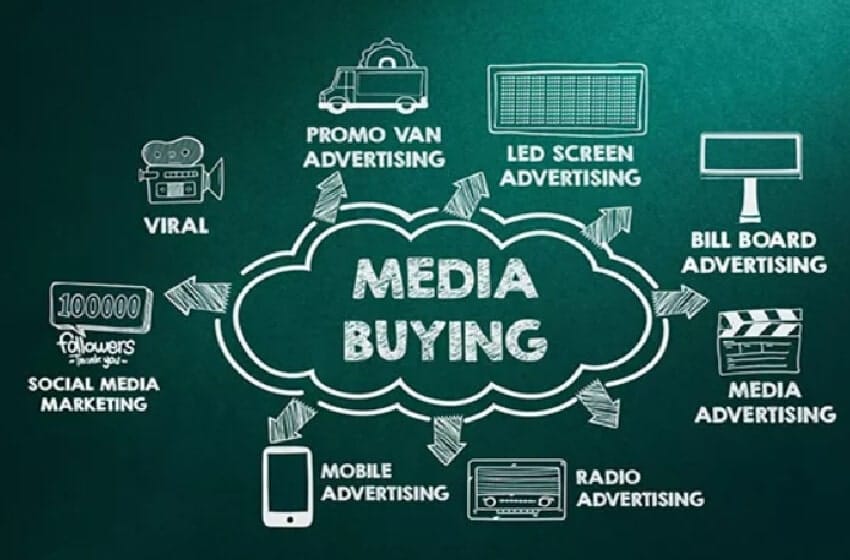
Every channel does a different job. Search reaches people who are already looking. Social reaches people by who they are and what they care about. Video tells a story before anyone is searching. Programmatic reaches people across thousands of websites, apps and streaming services. LinkedIn reaches professionals by job title and company. We recommend channels in the order most likely to pay back for your business, prove each one, then expand, rather than spreading a small budget thinly across everything.
Google search and Performance Max
For most businesses with active demand, search comes first because it reaches people at the moment they are looking. Our Google Ads management covers campaign structure, keywords and negatives, ads and assets, bidding, budgets and landing pages. We assess Performance Max against your objectives, conversion signals and creative resources, using the brand, asset and search controls supported by the account. Search and Performance Max can be tested together; the plan does not depend on every existing campaign already being profitable.
Meta: Facebook and Instagram
Facebook and Instagram offer broad reach and a range of audience options for local services, clinics, restaurants, retail, real estate, events and consumer brands. We choose settings permitted for the advertiser’s category, including restrictions affecting health and housing. Campaigns test several creative ideas and connect eligible lead forms to your follow-up process, with qualification questions that respect platform and privacy requirements.
YouTube and connected TV
Video reaches people with a story before they are searching and stays with them while they research. Our YouTube advertising service covers skippable and non-skippable formats, Shorts, audience building and measurement that looks beyond views. Where budgets allow, programmatic connected TV places your video on streaming services watched on the living room screen.
TikTok
TikTok reaches audiences that other channels miss, especially younger buyers and people discovering products through entertainment. Ads must be made for the platform: vertical, native in style, earning attention in the first second and working without sound. We plan a steady flow of new creative, because content ages quickly here.
LinkedIn for B2B
For B2B services, recruitment and professional audiences, LinkedIn targets by job title, function, seniority, company size and company name. A high-value B2B enquiry can justify a substantial media investment, but four questions need answering before the budget grows. First, spend needs a financial model: what an opportunity is worth and how many clicks, leads and meetings it takes to produce one. Second, targeting must reach real buyers rather than everyone with a vaguely related title. Third, creative fatigue sets in quickly with narrow audiences, so ads rotate on a schedule. Fourth, results must be traced past the lead form to meetings, opportunities and revenue, usually by connecting your CRM. Campaigns are then judged by pipeline rather than clicks.
Display and remarketing
Display campaigns show image and responsive ads across websites and apps, and remarketing brings back people who visited without acting. Our display and remarketing ads service covers audience lists, placement controls, frequency caps and creative for each size. Within a wider media buying program, display usually plays a supporting role: keeping your name in front of people who are still deciding.
Programmatic advertising
Programmatic advertising buys display, video, audio, connected TV and digital out-of-home placements across the open web through automated platforms. It is covered in detail below, because it is where careful media buying makes the biggest difference between money well spent and money wasted.
Programmatic advertising, explained
Programmatic advertising uses software to buy and manage ad placements. In a real-time auction, a website, app or streaming service offers an impression and buyers decide whether to bid based on the permitted audience signals, context, device, timing and price. Programmatic buying also includes negotiated fixed-price and reserved deals, so it is broader than real-time bidding alone.
How the pieces fit together
Advertisers and their agencies buy through a demand-side platform, which evaluates impressions and places bids. Publishers sell through a supply-side platform, which offers their inventory to many buyers. Ad exchanges connect the two. Audience data can come from your own first-party lists, from the platform itself or from third parties, and contextual targeting selects placements by the surrounding content rather than a person’s inferred interests. The platform may still process personal data for delivery or measurement.
Ways to buy programmatically
- Open auction: bids across participating inventory, with placement, price and supply-quality controls.
- Private marketplaces: invitation-only auctions with selected publishers; we review inventory quality, transparency and deal terms before buying.
- Preferred and programmatic guaranteed deals: fixed-price or reserved inventory agreed directly with a publisher, bought through the same automated pipes.
Formats you can buy
Programmatic covers standard display, native ads, online video, connected TV, streaming audio, podcasts and digital screens in transit, malls and office buildings. Measurement follows the objective: eligible conversions and viewability for display, reach and completed views for video, and audience delivery for audio and out-of-home. Branded searches and direct visits can provide supporting signals; a controlled lift study, where feasible, offers stronger evidence of incremental impact.
What good programmatic management looks like
Programmatic budgets can disappear into poor placements quickly. We start with curated inclusion lists rather than the entire open web, block low-quality sites and apps, use verified inventory where available, set frequency caps, check viewability and review placement reports every week. We also look at the supply path, favouring direct routes to publishers over chains of resellers that add fees without adding value. When programmatic cannot beat simpler channels for your goals, we will say so and keep the budget where it works.
Who programmatic suits
Programmatic advertising suits businesses with enough budget to test properly, a clear audience or geography, and goals that include reach and awareness as well as direct response. It works well for launches, brand building, multi-location businesses, retailers with strong product catalogues and B2B companies targeting specific organizations. For a small local business with a modest budget, search and social usually come first.
Budget allocation and pacing
How budget is split between channels matters as much as the total. We allocate based on the expected cost per customer in each channel, the volume each can deliver and how much data it needs to learn. Channels that prove themselves receive more; those that do not are cut back or paused. Budgets are paced through the month so money is not spent too early or left unused, and they follow your business calendar: more when customers are buying and your team has capacity, less when the schedule is full.
Every budget change is agreed with you, and media spend is paid directly to the platforms from accounts you own. We never mark up media spend. Our fee is for the planning, buying, creative direction and measurement work, and it is set out in writing so you always know what goes to the platforms and what comes to us.
Creative that fits each placement
A single ad cannot work everywhere. Search ads need precise, relevant text. Social ads need a visual that stops the scroll and a clear message in the first second. Video ads need a story that works in six, fifteen or thirty seconds. Display ads need to be understood at a glance, and audio ads need to work with no visual at all. We produce creative for each placement, test several versions and keep the ones that perform.
Creative fatigue is one of the most common reasons campaigns decline. When the same people see the same ad repeatedly, response falls and costs rise. We watch frequency and performance trends by ad, plan new concepts before fatigue sets in and keep a pipeline of fresh variations ready. Our design and video production teams can create new material, or we can work with assets you already have. We check creative against the evidence you provide and submit it for approval before publication. Regulated or technical claims go to your qualified reviewer where needed.
Audiences, targeting and privacy
Audience strategy starts with the people you need to reach and the settings each platform permits. Where eligible, we can use customer lists, website audiences, lookalike tools and purchaser exclusions. We check the consent or other applicable authority for the proposed use, along with category restrictions. Location and frequency controls are configured within each platform’s capabilities; they cannot ensure that every person sees a fixed number of ads across unrelated platforms.
Privacy rules and browser changes affect measurement and audience matching. We can implement first-party data workflows, consent settings, supported server-side conversion sharing and contextual campaigns. Before data is sent, the scope identifies the fields, recipients and permissions involved. Sensitive-category restrictions apply to audience selection and data use as well as the wording of the ad.
Measurement you can trust
Media buying decisions depend on what the data actually records. We test form submissions, bookings, purchases and call tracking, then connect later sales where your systems and permissions support it. Call duration can help qualify an enquiry but does not prove a sale. Consent settings and browser restrictions affect what is observed or modelled, and those gaps stay visible in reporting.
Several platforms may claim credit for the same customer, so we compare platform reports with your analytics and your own sales records, and we judge each channel on what it adds rather than what it claims. For channels whose main job is awareness, such as video, connected TV and programmatic display, we look beyond clicks to branded searches, direct visits, the performance of search campaigns and, where budgets allow, controlled tests that switch a channel off in some regions to measure the difference. Honest measurement sometimes shows that a popular channel is not earning its budget, and we will tell you when it does.
Landing pages and follow-up
Media buying is often judged by the cost of a click, but the page people land on usually decides whether that click becomes a customer. A visitor from an ad should land on a page that matches the ad’s promise, loads quickly on a phone, shows the offer and next step without scrolling and answers the obvious questions. We review existing pages, recommend changes and build dedicated landing pages for major campaigns, then test headlines, forms and layouts. A clearer landing page can improve conversion from the traffic it receives; we test the effect rather than assume every channel’s acquisition cost will fall.
Paid enquiries deserve a clear next step. We can set up acknowledgements, booking links, missed-call responses and follow-up through CS+, our CRM, or your existing system. Message timing and content follow the permissions and rules that apply to the channel. Your team records lead outcomes, which can inform reports and eligible platform conversion imports without sending unnecessary personal or sensitive information.
Brand safety and fraud protection
Ads can appear beside unsuitable content or attract invalid traffic. We use the placement exclusions, content controls and inventory checks supported by each buying platform, then review delivery reports. Unusual click patterns, low engagement and unexpected placement spikes trigger investigation; suspected sources can be excluded where the platform allows. These controls reduce exposure but cannot eliminate every unsuitable placement or fraudulent impression.
Advertising rules in Canada
Campaign planning accounts for the advertising rules in the markets you serve. Canadian requirements address misleading claims, mandatory-fee disclosures and evidence for environmental claims, alongside industry standards and platform policies. Paid or gifted relationships in influencer and partner content must be disclosed where required. Quebec campaigns need a review of the applicable French-language requirements. Commercial email and text follow-up requires an appropriate CASL basis, identification and unsubscribe handling where the law applies. Regulated claims and market-specific legal questions remain with your qualified advisers.
We flag relevant platform restrictions, request support for material claims and keep the approved creative with the campaign record. Your team confirms business facts and obtains any required professional review. We can adapt campaigns for Canada and the United States, but neither our checks nor a platform approval constitutes a legal compliance guarantee.
Reporting
Each month you receive a plain report: spend, results and cost per result by channel and campaign, what we tested and learned, where budget moved and why, and the plan for next month. You also have access to a live dashboard. Reports lead with the numbers that matter to the business, such as enquiries, bookings, customers and revenue, rather than impressions and clicks. Quarterly reviews step back to look at the whole media mix and whether the plan should change.
Retargeting across channels
Retargeting can reconnect with eligible visitors, but it is not suitable for every category or audience. Where permitted, we can segment by page and recency, exclude existing customers, rotate creative and use supported frequency controls. Health and other sensitive services may be restricted from using visitor or customer-list audiences; making the ad’s wording general does not remove those restrictions. Contextual placements, eligible predefined audiences and search campaigns remain options.
We report retargeting separately from new-customer activity because it reaches people who already know the business. Customer-list matching and exclusions are used only where the platform, category and data permissions allow them. We compare the reported results with customer records and, where practical, a holdout test to assess whether the ads added business rather than merely receiving credit.
Seasonality and timing
Demand and costs change through the year. Prices for ad space rise in competitive periods such as the holiday shopping season and fall in quieter months. Demand for many services follows the weather, the school year and tax and business deadlines, and Canadian seasons vary a great deal from coast to coast. We plan media around these patterns, buying more when your customers are active and the economics work, and holding back when costs rise faster than returns. Day and time scheduling follows when your customers convert and when your team can respond, across every time zone you serve.
Brand and performance together
Performance media asks people to act now. Brand media makes sure they know and trust your name before they need you. Businesses that only buy performance media often see costs rise over time, because they compete for the same small group of people ready to buy today. Video, social and programmatic campaigns can introduce the business to future customers. We set an objective and measurement plan for that investment rather than promise it will lower later search or retargeting costs.
We keep the balance practical: most budgets stay weighted toward channels that produce measurable enquiries, with a share for brand building sized to what the business can afford and judged by clear signals such as branded search growth and direct traffic. We share results with your creative and sales teams so the next round of ads builds on what worked and your salespeople know which offers people have seen.
Out-of-home, audio and offline media
Digital channels are not the only option. We can buy digital billboards and screens in transit, malls and office buildings, including programmatic placements selected by location and time. Streaming audio and podcasts reach people in different listening contexts, while print and radio may suit particular local audiences. Delivery reports, promo codes, tracked numbers and research can support evaluation. Branded search and direct traffic are useful context, but do not isolate an offline campaign’s contribution on their own.
Media buying by business type
Local service businesses
Clinics, trades and professional firms need campaigns matched to their service areas, demand and intake capacity. Search and local social may form the core; remarketing is added only where the service category and audience are eligible.
Multi-location and national brands
Businesses with locations in several provinces need one media plan with local detail: budgets by location, creative that names the right area and offer, and reporting that compares locations fairly. Programmatic and social make this practical at scale.
Ecommerce and retail
Online stores and retailers rely on Shopping and Performance Max, social campaigns with strong product creative and retargeting of visitors and cart abandoners, measured by revenue and return on ad spend rather than clicks.
B2B and professional services
Companies with long sales cycles combine search for high-intent terms, LinkedIn for precise audiences and retargeting across channels, measured by meetings and opportunities created.
Consumer brands, launches and events
Brands launching products, venues or events combine video, social and programmatic reach with search to capture the demand that awareness creates, with timing planned around the launch date.
How to brief a media buyer
A good brief saves weeks. Whether you work with us or another agency, send the following before the first meeting:
- What you sell, your best products or services and your margins on them.
- Who your best customers are, where they are located and how they usually find you.
- What a new customer is worth to you over time, and what you can afford to pay to win one.
- Your goals for the next quarter and year: enquiries, sales, launches or awareness.
- Past advertising: channels, budgets, results and what you believe did or did not work.
- Access to your ad accounts, analytics and, where possible, CRM or sales data.
- Creative assets, brand guidelines and any claims that need evidence.
- Constraints: seasonal capacity, service areas, regulatory rules or approval steps.
With that information, a media buyer can build a realistic plan instead of guessing.
In-house, agency or both
Some businesses run paid media in-house, some hand it all to an agency and many do a mix. We work in whatever way suits you: managing everything, managing specific channels while your team runs others, or supporting an in-house specialist with strategy, creative, audits and a second opinion. Whatever the arrangement, your business retains appropriate access to its accounts and campaign records. We identify platform-managed audiences, non-exportable data and third-party rights before they become handover issues.
The first 90 days
The launch schedule depends on account access, tracking, creative, landing pages and approvals. We agree the sequence in the scope, then launch controlled tests and review waste, lead quality and sales outcomes. A 90-day review is a useful planning checkpoint, but longer sales cycles or smaller budgets may need more time before cost per customer is meaningful. The next phase follows the evidence gathered, with gaps and assumptions clearly stated.
Testing and learning
Every account runs a simple testing plan: one question at a time, such as which audience, offer, headline, image, video length or landing page produces more customers, with enough budget and time to reach a reliable answer. Winning versions become the new baseline. Channel tests follow the same discipline. A new platform is given a defined budget, a clear goal and a fixed period, then kept, expanded or dropped based on the results. The findings inform the next budget and creative decisions; tests may show an improvement, no clear difference or a reason to stop a channel.
Common media buying mistakes
We see the same problems in many accounts we take over. Budgets spread across too many channels to learn anything. Campaigns judged by clicks and impressions rather than customers. Automated campaign types and platform recommendations accepted without scrutiny. Display and programmatic placements running on low-quality sites and apps nobody reviewed. The same creative running for months until performance collapses. Retargeting results mixed with new-customer results so everything looks better than it is. Conversion tracking that counts page views or duplicate forms. And ad accounts owned by a previous agency, so the business cannot see its own history. We investigate these issues before recommending more spend, prioritizing the changes most likely to improve lead quality, measurement or budget control.
Choosing a media buying agency in Canada
Compare agencies against the work your organization needs: markets, channels, audience scale, creative requirements, measurement and procurement constraints. Evaluate the delivery team and operating process against those requirements rather than choosing by agency size alone.
Use these questions to clarify scope, responsibilities and reporting before appointing an agency:
- Will you own the ad accounts, pixels, audiences and data?
- Who plans and manages the buying each week, and how senior are they?
- Will reports show customers and revenue, or only platform metrics?
- How are channels chosen, and what happens when one is not working?
- Is media spend marked up, and does the fee rise automatically with spend?
- Can the agency run French campaigns for Quebec and campaigns in the United States?
A named specialist manages your media, and your business retains account access where the platform permits. We compare campaign results with your sales records and assess channels against their agreed role, including longer-term brand objectives. Media spend is never marked up; management and production fees are disclosed separately.
What media buying services cost
Media buying costs have two separate parts. Media spend is your advertising budget, paid directly to Google, Meta, LinkedIn, TikTok or the programmatic platform from accounts you own. We never mark it up. Management is our fee for planning, buying, optimization, creative direction and reporting, and it is quoted in writing after a free review.
The management fee depends on a few cost drivers: the number of channels and campaigns, whether programmatic or connected TV is included, how much creative is produced and how often it is refreshed, whether landing pages are needed, the depth of tracking and CRM integration, the number of locations or languages, and the level of reporting. One-time setup, such as tracking, account restructuring and landing pages, is quoted separately from ongoing monthly management. Every fee is confirmed in writing before work starts. Request a scoped proposal.
Related guides: what a media buyer actually does and choosing the right social platform for your ad budget.
Where we work
Our team works from 126 Willowdale Ave., Suite #3, Toronto and plans and buys media for businesses across Canada and the United States. Canada Create™ is a BBB Accredited Business with an A+ rating, and our toll-free sales line is available 24/7 at +1 (800) 808-9235, with AI-assisted support intake and team follow-up.
Talk to a strategist
Ready when you are!
Request a scoped proposal.
Tell us your goals, budget and timeline. You get a plan, a price and a named strategist, so your next stage of growth starts now.
How a media buying engagement starts
The scope sets the launch sequence, dependencies and review points.
- Free review Discovery
Past results, tracking and landing pages.
- Media plan Planning
Channels, budget and targets in writing.
- Tracking Before launch
Conversion events tested, data permissions reviewed and measurement gaps recorded.
- Launch After approvals
First channels and creative live.
- Remove waste Initial review
Placements, audiences and terms cut.
- Test and scale Ongoing testing
Budget moved to what produces customers.
Related services
Explore the scope and approach for related services.
What clients say on Google
Reviews pulled live from our Google Business Profile.

They created a beautiful, professional website that brings together my treatments and makes it easy for visitors to learn about the clinic, explore their options, and book a consultation. Having a website I feel proud to share is a wonderful feeling. It gives people an introduction to ProDerma before they even walk through the door.
Their work has also included Google Business Profile optimization, helping me strengthen how my clinic appears on Google Search and Maps. For a local clinic in downtown Toronto, making it easier for people to find accurate information about my services, location, and booking options is incredibly valuable.
What stays with me most is the care and effort behind the work. I’m grateful to Amir and the Canada Create team for helping me build an online presence that reflects the business I’m working so hard to grow.
I would happily recommend Canada Create to other clinic owners and business owners looking for website design, Google Business Profile optimization, and thoughtful marketing guidance. Thank you for supporting ProDerma Clinic and for putting so much heart into your work!



As the owner of a boutique medical aesthetics practice, my business is very personal to me. I wanted a website that showed not just my services, but the philosophy, warmth and individualized care behind my practice. I had a very particular vision, and Canada Create brought it to life more beautifully than I imagined.
From day one, Amir was professional, enthusiastic and detail-oriented, and he took a real interest in understanding my business. He and his team treated the project as a partnership. They took the time to learn what makes my practice unique and how to communicate that to new clients.
The website is beautiful. It's elegant, welcoming and thoughtfully designed, from the overall look and photography to how the information is laid out. It feels authentic to my brand and makes exactly the impression I was hoping for.
They also arranged a professional photoshoot for my practice, which was a highlight. The photos add a personal touch that captures the personality of my business. That matters so much in an industry built on trust and connection.
I've been just as impressed by their technical knowledge. Canada Create manages my website analytics and helps me understand how the site is performing and how to grow my online presence over time. That ongoing support is invaluable. They understand a website has to do more than look good. It has to help build the business.
Their communication, patience and willingness to listen have been wonderful. They took my ideas seriously while bringing their own expertise and creative suggestions. I always felt valued as a person, not just another client. I've spent years building a practice that reflects my values, so I really appreciate people who take pride in their work, and I see that in Amir and his team.
I'm so proud of what we've created together and look forward to continuing to work with Canada Create as my practice grows. If you're considering a new website, a brand refresh or a stronger online presence, I recommend them wholeheartedly.
Amir, thank you for your guidance, dedication and care. And thank you to the whole Canada Create team for turning my vision into something so beautiful. A five-star experience!
Cathy Douglas, RPN, MBA, CISESCO
Maison 58

I really appreciate their support and the work they’ve done to help my business. I would definitely recommend Canada Create to other business owners looking for help with their marketing and online presence



I knew nothing about how the process worked, but they were professional, patient, and incredibly helpful. They took the time to understand what I wanted, handled the setup and design, and made sure everything worked properly.
I’m very happy with the final result and would definitely recommend them to anyone who needs help creating a professional website or getting their business online.

We saw noticeable growth in engagement, leads, and overall online presence within just a few weeks. Communication was always clear and timely, and they consistently went above and beyond to make sure we were happy with every detail. Highly recommended!

We worked with Canada Create Agency for our marketing needs including content creation, videography, and editing, and the results were incredible. Their team brought so much creativity, professionalism, and energy to every project. They really took the time to understand our vision and turned it into content that perfectly captured our brand’s personality.
The process was smooth, enjoyable, and collaborative from start to finish. We were especially impressed by their attention to detail and how quickly they delivered top-quality work. We genuinely loved the outcome and look forward to working with them again.
Highly recommended to anyone looking for a marketing team that truly cares about your success.

They took my ideas, refined them with precision, and turned them into polished, scroll-stopping content that actually converts. Every edit felt intentional, every post had strategy behind it, and the communication was seamless. No ego, no fluff just pure execution and results.
What impressed me most was Amir’s leadership. He’s not just a CEO, he’s a creative visionary who pushes for excellence in every detail. He listens, adapts, and brings real insight to the table. It’s rare to find a partner who can merge design aesthetics, marketing psychology, and performance thinking like that.
If you’re serious about growing your brand, sharpening your content game, or leveling up your digital presence Canada Create is the team you want in your corner. Amir and his crew don’t play small; they build brands that command attention.

Free review
Not sure where to start? Send us what you have.
Share your current site, campaign or brief. A strategist replies within one business day. A scoped written recommendation and pricing follow discovery.
Why businesses choose Canada Create™
One accountable team
SEO, ads, website and intake run together.
Claims checked
Creative checked against supplied evidence, platform requirements and your approval process.
Your approval first
Nothing published without your review.
Measured by clients
Consultations and new clients, not clicks.
Transparent pricing
Management fees in writing, with media spend and platform charges identified separately.
Canada and the United States
Campaigns planned and managed for businesses in both countries.
Since 2008
Eighteen years of digital marketing.
BBB accredited, A+ rated
Accredited by the Better Business Bureau.
Media buying agency: common questions
What is a media buying agency?
A firm that plans, negotiates, buys and manages advertising space for a business across search, social, video, programmatic and offline channels, then moves budget toward the placements that produce customers.
What is the difference between media planning and media buying?
Media planning sets the strategy: audiences, channels, budget split and how success is measured. Media buying carries it out: setting up campaigns, bidding or negotiating, pacing budgets and adjusting daily. We keep both in one team.
What is programmatic advertising?
Programmatic advertising uses software to buy and manage display, video, audio, connected TV and digital out-of-home placements. It includes real-time auctions as well as negotiated fixed-price and reserved deals. We review inventory, supply paths, measurement and brand-suitability controls for the proposed buy.
What do media buying services cost?
Costs have two parts. Media spend is your budget, paid directly to the platforms and never marked up. Management is quoted in writing after a free review, based on channels, creative, landing pages, tracking and reporting needs.
Which channels should we use?
We choose channels around your buyers, objectives, budget and sales cycle. Search can capture existing demand, while social, video, programmatic and offline placements can build reach or support a launch. Retargeting is considered where the category, audience and data permissions allow it. Tests can run alongside established campaigns when the plan supports them.
Who are the big media agencies?
Major global groups include WPP, Publicis Groupe, Omnicom, Dentsu and Havas. Omnicom completed its acquisition of Interpublic in November 2025. When choosing an agency, compare the team, markets, channels, procurement requirements and reporting approach your business needs.
How do you measure results?
We test conversion tracking and compare platform reports with analytics and your sales records. Enquiries, bookings and customer revenue are distinguished from views and clicks. Branded search and direct visits can inform an awareness review, while controlled tests offer stronger evidence of incremental impact where feasible.
Who owns the ad accounts?
Your business keeps appropriate administrative access to accounts created in its name where the platform permits. We document campaign records, handover and export options. Platform technology, audience features and third-party data remain subject to their own terms and permissions.


Plan your next project
Review the offer, budget and enquiry process before committing your marketing spend.